
Complete guide to digital image correlation
Digital Image Correlation (DIC) is an optical, non-contact measurement method that tracks the displacements and deformations of an entire part surface from camera images. Combined with finite element models, it lets you validate, update and build credibility for structural simulations. This guide gathers our resources, from fundamentals to test implementation and model updating.
DIC fundamentals
Before getting started, you need to understand what DIC measures, what it is for and which hardware to choose. These resources cover the basics: the measurement principle, camera selection, and the role of DIC in a digital-twin approach.
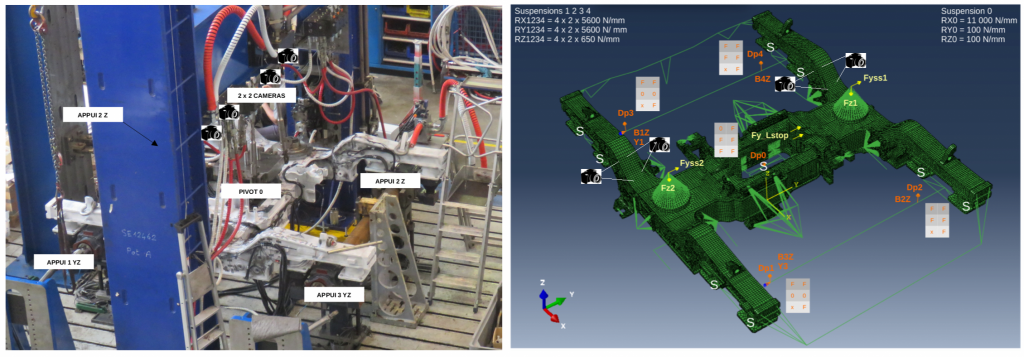
- Digital Image Correlation – The basics
- Digital Image Correlation, how to choose your acquisition hardware?
- Advantages of imaging-based structural test instrumentation
- The digital twin definition: bringing the real world into your simulations
Speckle pattern: preparing the surface
DIC relies on a random texture applied to the part. A well-sized, well-made speckle pattern directly determines measurement quality; these guides explain how to design it and compute its ideal size.
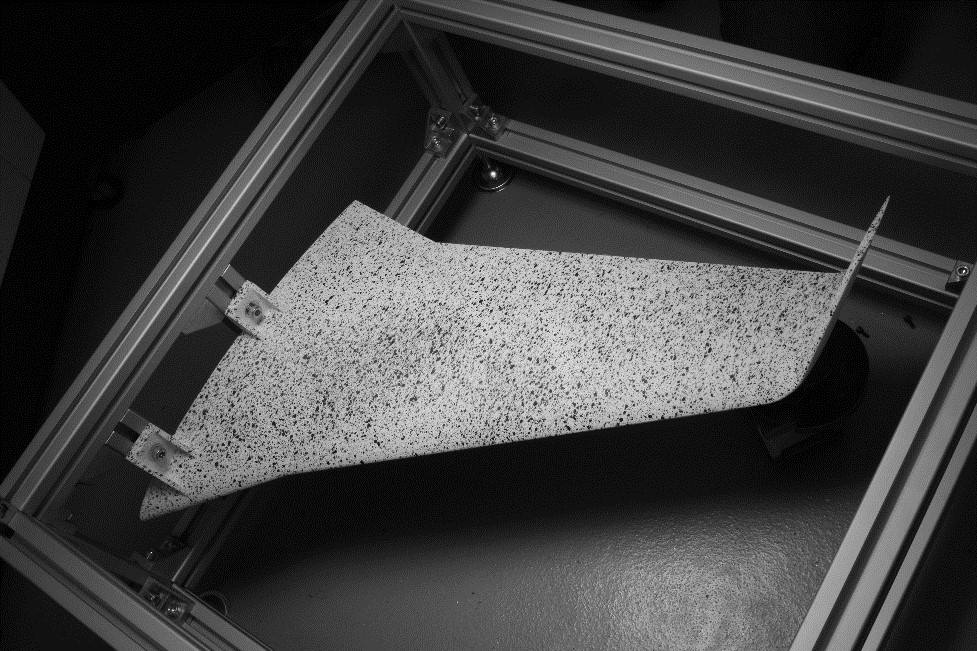
- How to make a speckle pattern suitable for Digital Image Correlation?
- Speckle pattern size: how to calculate it for your DIC test?
Camera calibration
A reliable metrological measurement requires properly calibrated cameras. From classic calibration to more robust methods (hybrid, synchronized), here is how to guarantee the accuracy of your multi-camera systems.

- Camera calibration: principles and procedures
- Hybrid calibration: a robust alternative to self-calibration
- Measurement robustness and the use of “automatic meshing”: focus on synchronized calibration for DIC
Methods and processing
Local or global DIC? How do you exploit the measured field and link it to the simulation mesh? These articles detail the correlation approaches and processing tools such as mechanical regularization.
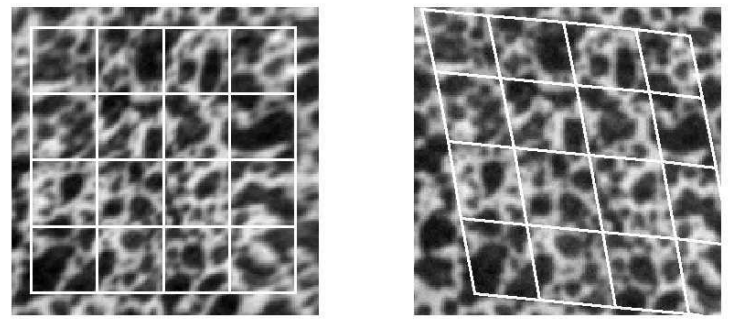
- Local DIC or Global DIC: Which is the Best Method for Your Application?
- Digital image correlation: The contribution of the global method
- Mechanical regularization in EikoTwin DIC
- Technical functionality: selection of the measurement mesh
Simulation validation and model updating
The core value of DIC: comparing tests and computations in the same reference frame to identify discrepancies and update models. From theory (sources of discrepancy, VVUQ) to industrial cases, here is how to build simulation credibility.
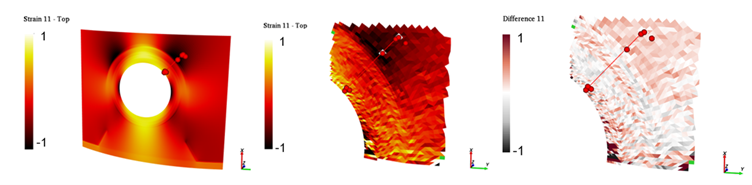
- Understanding and controlling the sources of discrepancy between tests and simulations
- Calibration of material parameters from a single test: workflow
- Building simulation credibility: the validation of Ariane 6’s Dual Launch Structure
- Modal analysis validation – in practice
- FEA Model Validation with DIC — Bird Strike Impact Testing
Advanced measurements and specific cases
Multi-camera, high-speed, high-temperature, coupled environments… DIC adapts to complex tests. These industrial case studies show the method at work under demanding conditions.
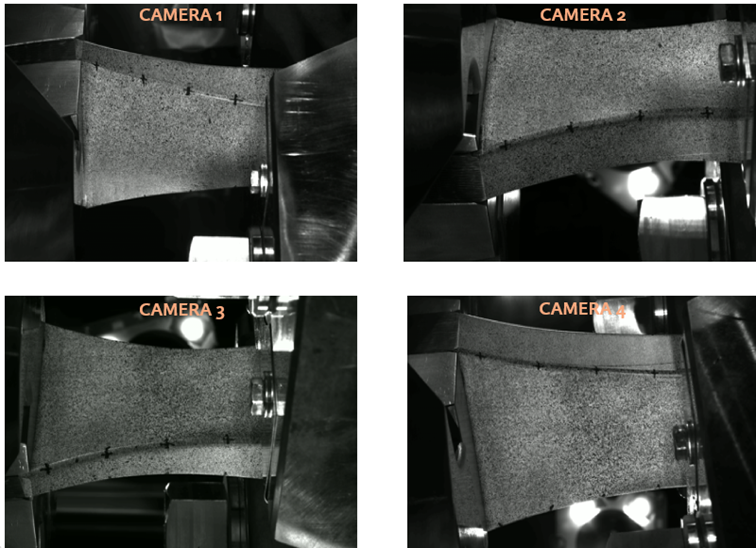
- Multi-camera DIC and model calibration of a turbine blade – A collaboration between Safran, EikoSim and Ansys
- Integrating multi-camera DIC at MBDA
- High-Speed DIC — Full-Field Measurement of Airbag Deployment
- High-temperature tests for ceramic matrix composites
- Desing of a Thermomechanical Test Bench — Coupled DIC and Infrared Imaging
- Thermomechanics on CFRP: DIC + infrared
- Modal analysis: how can Digital Image Correlation (DIC) help?
- Forming and DIC: measurement of large deformations
- Digital image correlation for crack measurement
- Crack tracking on a structure : practical use case in thermal fatigue @ Liebherr Aerospace
Errors and best practices
A DIC measurement must be prepared. Understanding error sources and following test best practices avoids unusable images and ensures reliable results.
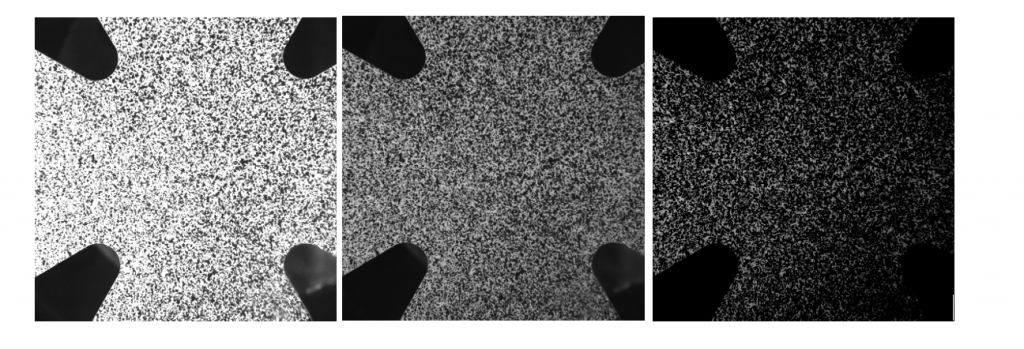
- Sources of measurement errors with digital image correlation
- Measurement errors and digital image correlation
- What are good Digital Image Correlation test practices?
Ecosystem and integrations
DIC fits into an engineering chain. Virtual test preparation with Blender, connection to solvers like Abaqus: here is how to embed it in your simulation environment.
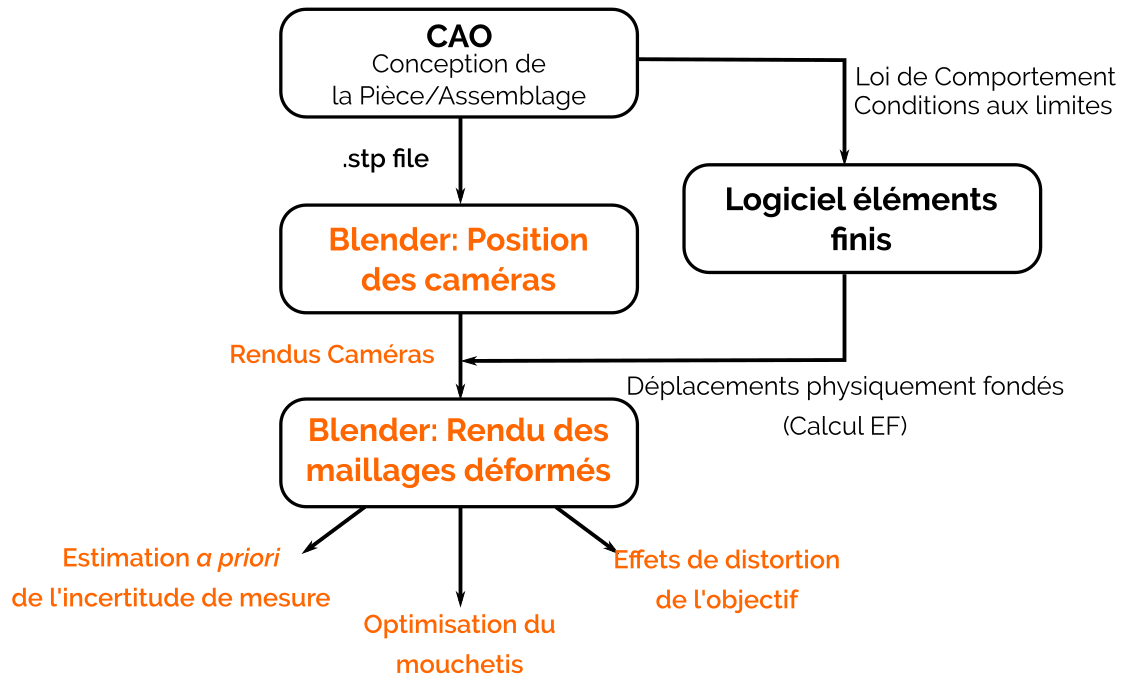
- Previsualization with Blender of a complex structural test
- How to preview your test using Blender software?
- Simulation correlation with Abaqus: how far we’ve come in linking a solver to our software environment
Go further with EikoTwin
EikoSim develops EikoTwin, the software suite connecting your DIC measurements to your finite element models. Discover EikoTwin DIC, or request a demo. For definitions of the terms used here, see the digital image correlation glossary.