

EikoTwin v2026.1 – release notes
27 February 2026
EikoTwin DIC
The new version of EikoTwin DIC includes a brand new Python API, simplifies marker tracking, and enables new analyses.
- New Python API
- Creation of custom sensors/fields
- Direct access to the database for post-processing by script
- Creation of custom sensors/fields
- Direct access to the database for post-processing via script
- Marker tracking now possible without DIC
- Batch mode: automation of command line processing and integration into a workflow
- Support for new CAE formats (LS-Dyna, MSC Nastran, etc.)
- Interface improvements
- New experimental modal analysis plugin (optional): extraction of natural frequencies and modal shapes from DIC time data, visualisation of vibration modes for optimisation and diagnostics
EikoTwin Vision
We spent hours fine-tuning EikoTwin Vision’s behaviour to make it simpler, faster and more enjoyable to use.
- Interface improvements for greater stability and fluidity
- Faster calibration
- Integration of NI cards: -10/10V BNC input/output, direct camera triggering
EikoTwin Digital Twin
EikoTwin Digital Twin receives a host of improvements with more robust analysis and greater boundary condition control capabilities.
- Node-by-node control of boundary conditions, even for 3D simulations
- Improved sensitivity analyses
- Better stability
- Batch mode: scheduling of sensitivity or identification analyses
- Linux version compatible with server calculations (slurm)
Matériel
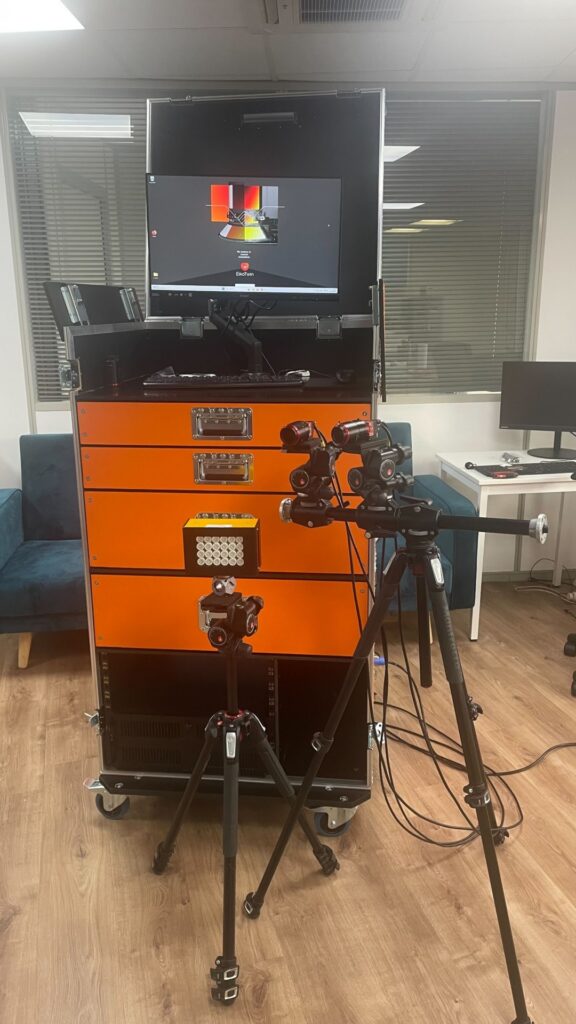
This year also sees the addition of extra equipment, including our workbench and additional capabilities for applying controlled speckles.
- New mobile workbench
- Adapted workspace (keyboard + mouse)
- Large storage drawer
- Foldable and rotating arm
- Complete system storage (camera, tripod, lighting)
- Direct connection for data acquisition and triggering
- Additional equipment: speckle applicator roller, large-format stencils
Posted in Release Notes

98-100 AVENUE ARISTIDE BRIAND
92120 MONTROUGE
FRANCE