


Posts by Team Eikosim
White paper – simulation validation with DIC
After 5 years of existence, and while in the permanent process of remodelling our offer and business model, we thought it would be a good time to summarize what we’ve understood of our industry and the key pain/value points we detected. We’re publishing the first parts on LinkedIn to get more feedback before we release the…
Read MoreSources of measurement errors with digital image correlation
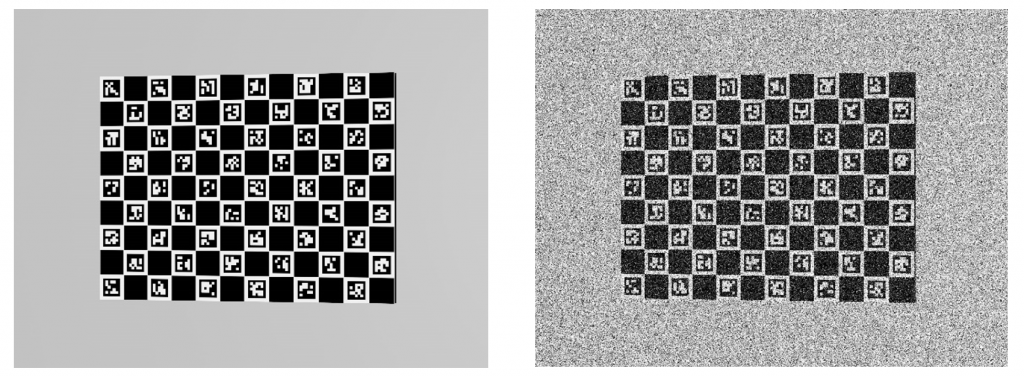
In digital image correlation as in any measurement process, errors affect measured data. The characteristic of this method lies in the direct dependency between the test and the measurement error [1,2,3]. Indeed, errors need to be estimated for every new test. These errors can be classified in two categories: the bias corresponding to systematic errors…
Read MoreCamera calibration: principles and procedures
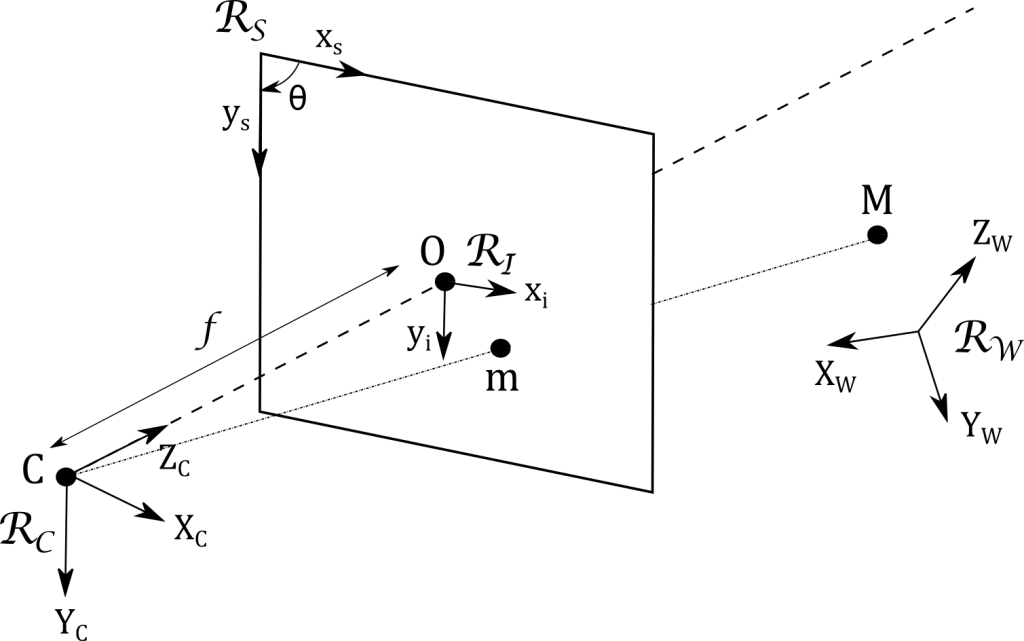
Using a multi-camera system for metrology and accurate measurements requires the calibration of the pixel coordinates of these cameras. They can be represented mathematically by a projection model in the form of a matrix, allowing the passage of the position of 3D points to their projection in 2D image space. The process of estimating the…
Read MoreEikoTwin DIC and the measurement of small strains
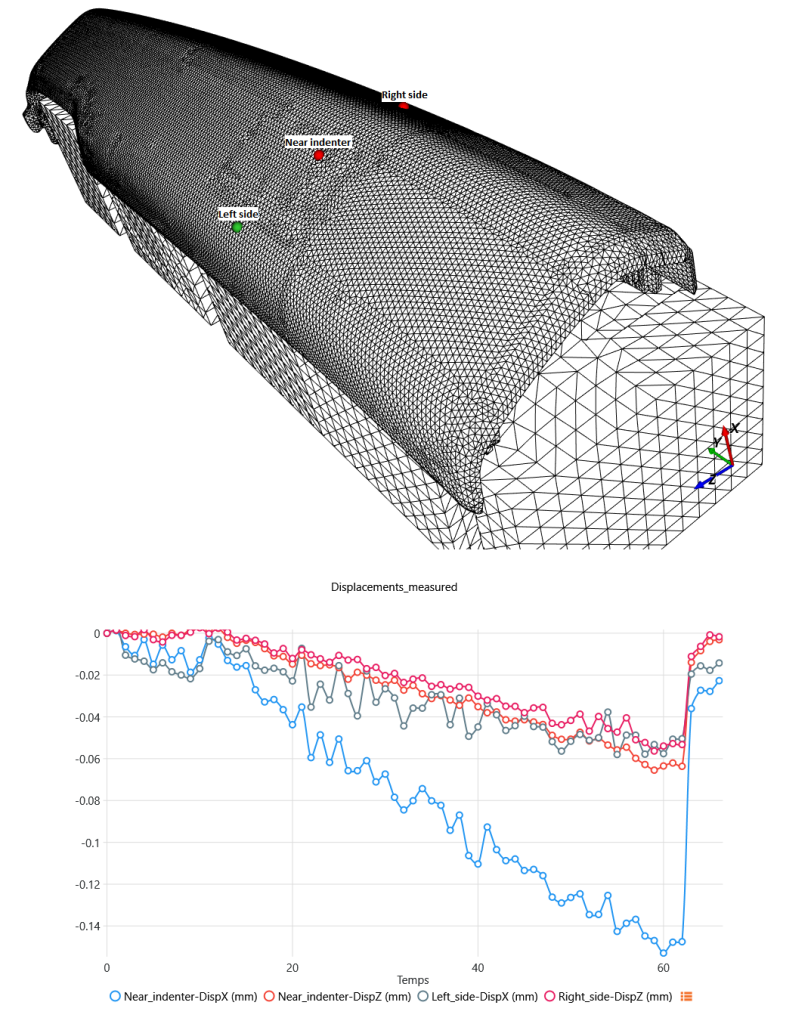
Innovation in the automotive industry Innovation is at the heart of the automotive industry: autonomous vehicles, shared mobility, advanced equipment, etc. In order to reinvent themselves and remain competitive, it is necessary for automotive industries to innovate and develop new technologies. It is therefore essential for these companies to perform realistic simulations. The objective is…
Read MoreThe Batch mode: a new EikoTwin DIC plugin
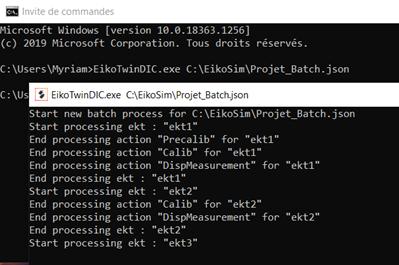
In order to continuously improve the features offered by EikoTwin DIC software, EikoSim has developed a new optional plugin: the Batch mode. It enables to launch the pre-calibration, calibration, and displacement measurement for several EikoTwin DIC projects in EKT format through a configuration file prepared beforehand. This partial automation of the data processing ensures significant…
Read MoreIRT Saint-Exupéry trusts us with our software : EikoTwin
Ludovic Barrière is Project Manager at IRT Saint-Exupéry. He tells us about his experience with our software: EikoTwin DIC and EikoTwin Digital Twin. The software EikoTwin DIC in a few words EikoTwin DIC is an image-processing software dedicated to the link between measurements and numerical simulations. It uses a patented measurement technology to provide an…
Read MoreSafran Ceramics trusts EikoSim with the “Thermal” plug-in
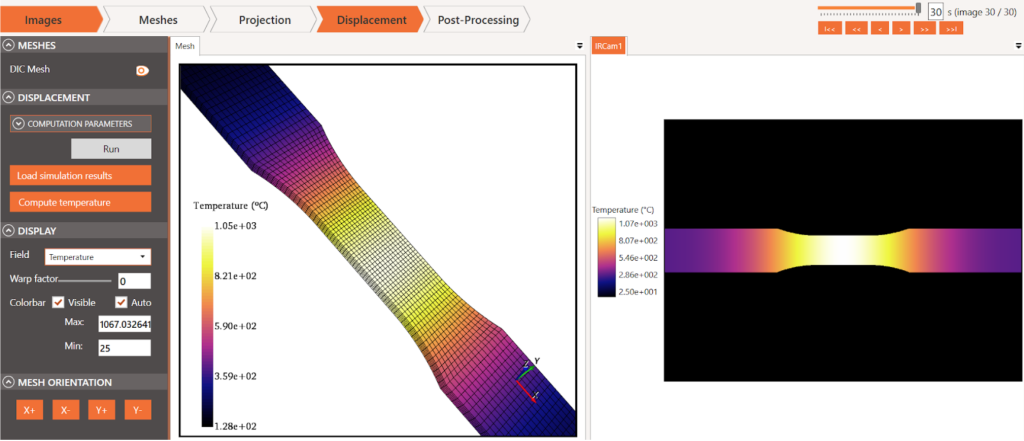
Benjamin Lacombe is a Mechanical Design Engineer at Safran Ceramics. He tells us about his experience with EikoTwin DIC and the development of the “Thermal” plug-in. « I work at Safran Ceramics, Safran group’s center of excellence for high-temperature composites. We are in charge of developing high-temperature solutions for tomorrow’s aircraft. We conduct a large number…
Read MoreTechnical functionality: selection of the measurement mesh
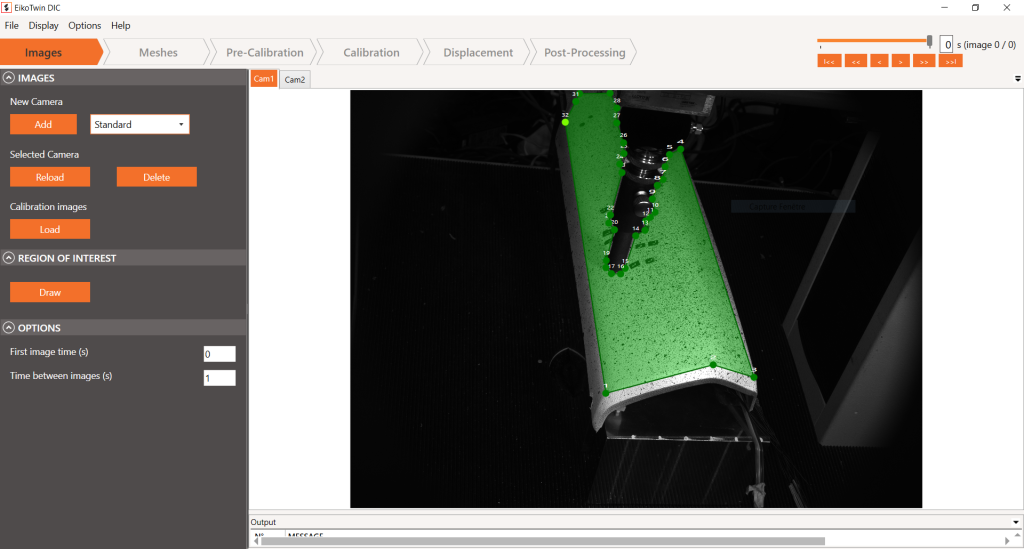
On EikoTwin DIC, the measurements are directly expressed on the simulation mesh. In order to choose which areas of interest for the test are visible to the camera(s), the so-called measurement mesh must first be selected. Indeed, this mesh will be the one where the results will be calculated. It is, therefore, essential to select…
Read MorePreparation of your Digital Image Correlation test with Blender
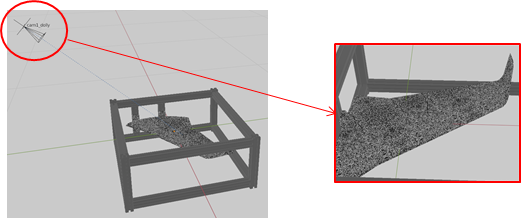
This article invites you to care about an unexpected topic: the preparation of a digital image correlation test with Blender. While research articles do not always mention this aspect of digital image correlation measurements, test preparation is a crucial step in the procedure. The aim is to ensure that the images that will be taken…
Read MoreSimulation validation with EikoTwin DIC
Simulation validation with EikoTwin DIC relies heavily on image processing. Image analysis methods provide full-field test data that can be used to validate and improve your simulation. Using the unique “Model-Based testing” method, EikoTwin DIC allows measuring displacements and strains of the observed parts directly on the simulation mesh. Thus, you will be able to…
Read More